Reviewed by E. Connor Smallwood, O.D.
You can read messages on your phone, drive to work, and recognize familiar faces across the room. Your glasses seem to work perfectly, and nothing about your eyes feels unusual.
So why should you be concerned about glaucoma?
It is an important question, especially for adults who have gone years without noticing changes in their vision.
Glaucoma can develop without noticeable symptoms in its early stages. Someone may continue seeing clearly while gradual changes are affecting the optic nerve.
For families concerned about glaucoma in Gahanna and nearby communities, understanding this difference is an important part of maintaining long-term eye health.
At Smallwood Eye Associates, E. Connor Smallwood, O.D., takes an approach to eye care that considers more than your ability to read letters on a chart. Your medical history, the health of your eyes, and individual risk factors also deserve attention.
After all, protecting your vision is not just about seeing clearly today. It is about understanding what could affect your sight in the years ahead.
Table of Contents
What Is Glaucoma, and Why Does It Matter?
Glaucoma refers to a group of eye diseases that can damage the optic nerve, which carries visual information from your eyes to your brain.
This nerve plays an essential role in how you see the world.
When its nerve fibers become damaged, areas of vision loss can develop. At first, these changes may be difficult to notice.
The most common type in the United States is primary open-angle glaucoma.
With this form of glaucoma, damage generally develops gradually. Patients often experience no pain or obvious warning signs during the early stages.
As the condition progresses, peripheral vision may become affected. This means someone may gradually lose the ability to notice objects toward the sides of their visual field.
Without appropriate treatment, glaucoma can cause significant, permanent vision loss.
The encouraging news is that early detection and appropriate treatment can help slow or prevent additional damage.
The purpose of glaucoma screening in Gahanna is not to create unnecessary worry. It is to recognize that the absence of symptoms does not always mean your eyes are healthy.
Why Can Glaucoma Go Unnoticed for Years?
Most people associate vision problems with changes they can easily recognize.
When reading becomes difficult, we think about updating our glasses. When objects appear blurry, we look for an explanation.
Glaucoma can behave differently.
During the early stages of open-angle glaucoma, central vision may remain clear.
You may continue reading, working on a computer, watching television, and completing daily activities without noticing anything unusual.
Meanwhile, subtle changes in your visual field may be developing.
Because these changes often happen slowly, the brain may compensate for some missing visual information.
According to the National Eye Institute, approximately half of Americans with glaucoma do not know they have the condition.
That is one reason waiting for symptoms is not a reliable approach to detecting glaucoma.
Does Glaucoma Always Cause Blurry Vision?
No.
Blurred vision may occur in some situations, but it is not necessarily an early symptom of open-angle glaucoma.
A person may maintain excellent central vision even while glaucoma-related damage is developing.
For that reason, a visual acuity test, which measures how clearly you can read letters at a certain distance, cannot rule out glaucoma by itself.
Evaluating the optic nerve and considering other clinical findings are essential parts of the process.
Eye Pressure and Glaucoma: What Is the Connection?
Intraocular pressure, commonly called eye pressure, is one of the most familiar aspects of glaucoma evaluation.
Inside your eyes, a fluid called aqueous humor is continuously produced and drained.
When this fluid does not drain efficiently, pressure inside the eye can increase.
For some individuals, elevated pressure contributes to optic nerve damage.
However, one important distinction is often misunderstood:
High eye pressure and glaucoma are not the same thing.
Does High Eye Pressure Mean I Have Glaucoma?
Not necessarily.
Some people have higher-than-normal intraocular pressure without evidence of glaucoma-related optic nerve damage.
This condition is called ocular hypertension.
It may increase the risk of developing glaucoma and require monitoring or additional evaluation, but it does not automatically establish a glaucoma diagnosis.
Can You Have Glaucoma With Normal Eye Pressure?
Yes.
Some people develop glaucoma even when their eye pressure measurements fall within the generally accepted normal range.
This is commonly referred to as normal-tension glaucoma.
According to the National Eye Institute, the amount of pressure an optic nerve can tolerate varies from person to person.
There is no single eye pressure measurement that can independently confirm or exclude glaucoma.
Why Is Measuring Eye Pressure Still Important?
Because elevated intraocular pressure is an important risk factor, and lowering eye pressure is a major part of glaucoma treatment.
Tonometry, the test used to measure eye pressure, provides valuable information during an eye examination.
However, the result must be interpreted alongside other findings.
Normal eye pressure does not guarantee that glaucoma is absent, just as elevated pressure does not automatically mean glaucoma is present.
Understanding this distinction is one of the most important parts of informed glaucoma screening.
Who Is at Greater Risk of Developing Glaucoma?
Although anyone can develop glaucoma, certain factors increase the likelihood of the disease.
Knowing your individual risk factors can help guide decisions about eye examinations and additional testing.
Age
The risk of glaucoma increases as people get older.
Adults over 60 deserve particular attention, even when they have no noticeable difficulty seeing.
Family History
Having a close family member with glaucoma increases your risk.
If a parent or sibling has been diagnosed, share that information with your eye care provider.
Family history can influence how your optic nerve, eye pressure, and other findings are evaluated.
Ethnicity and Population Risk Factors
Research has identified increased glaucoma risks among certain populations.
The National Eye Institute highlights higher risk among African Americans over age 40 and adults over 60, particularly those of Hispanic or Latino heritage.
These findings help guide preventive care. However, population-level statistics do not determine an individual’s diagnosis.
Elevated Intraocular Pressure
People with ocular hypertension may be more likely to develop glaucoma.
The significance of elevated pressure depends on additional factors, including optic nerve appearance and other clinical findings.
Other Eye Conditions and Medical Factors
High myopia, certain anatomical characteristics of the eyes, previous eye injuries, and prolonged corticosteroid use can also be associated with increased glaucoma risk.
Having one or more risk factors does not mean you will develop the disease.
It means those details should be considered during your eye health evaluation.
How Can an Eye Examination Help Detect Glaucoma?
Glaucoma evaluation involves more than measuring how clearly someone can see.
The National Eye Institute emphasizes the importance of comprehensive dilated eye examinations for detecting glaucoma.
Depending on your medical history and examination findings, several steps may contribute to an appropriate evaluation.
Reviewing Your Personal and Family History
An eye examination begins with understanding the patient.
Your provider may ask about glaucoma in your family, previous eye conditions, medications, and relevant medical concerns.
These details can help identify risk factors that might otherwise go unnoticed.
Measuring Intraocular Pressure
Tonometry measures the pressure inside your eyes.
It is an important part of assessing glaucoma risk, but the result is not interpreted in isolation.
Evaluating the Optic Nerve
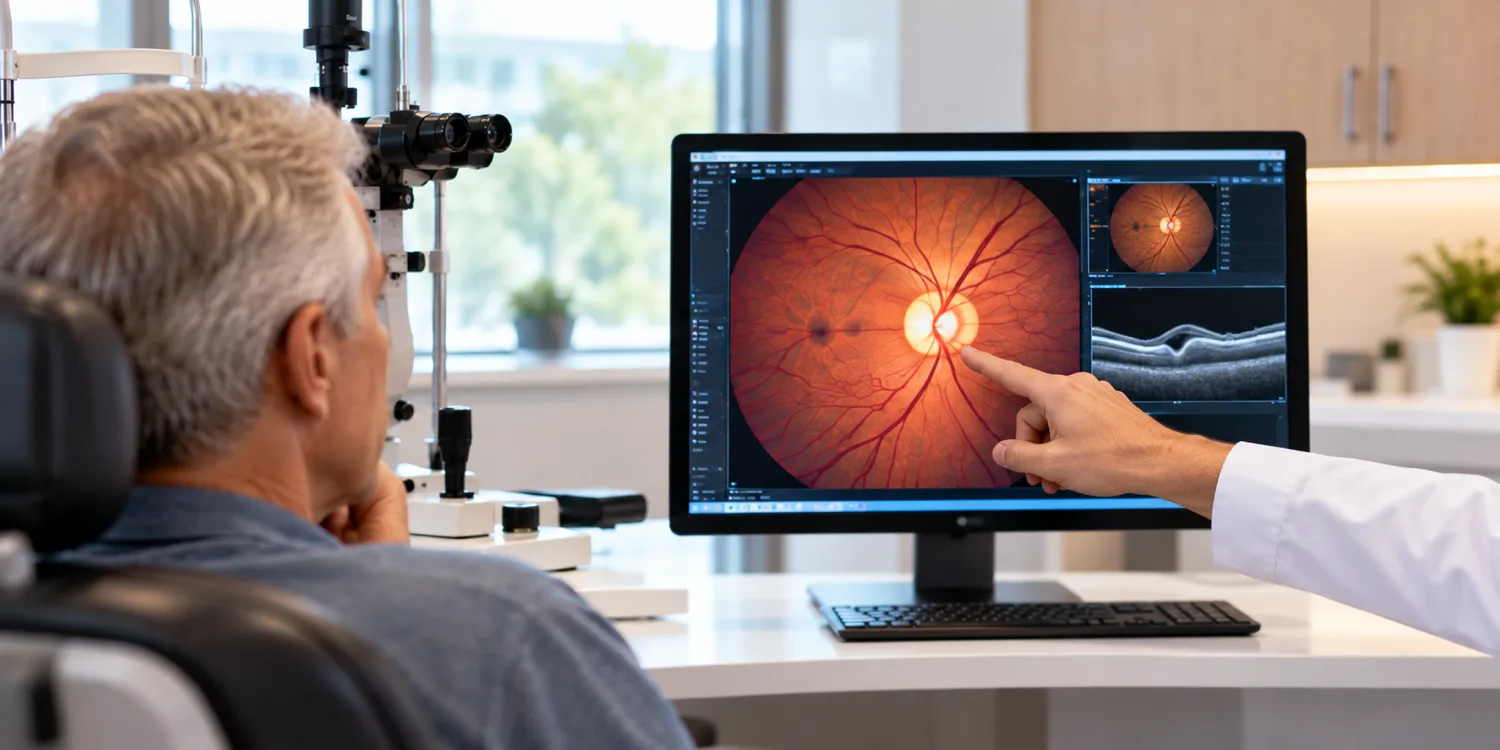
Glaucoma can produce characteristic changes in the optic nerve.
Examining its appearance can help identify findings that deserve closer investigation.
When appropriate, dilating the pupils allows a more detailed view of internal eye structures.
Assessing Peripheral Vision
Your visual field includes everything you can detect while looking straight ahead, including what you see toward the sides.
Visual field testing can identify changes in peripheral vision that a patient may not yet notice during everyday activities.
Additional Diagnostic Testing
In some circumstances, further evaluation may be recommended.
Tests can include optical coherence tomography (OCT), corneal thickness measurement, and an assessment of the eye’s drainage angle.
These examinations provide complementary information and may be useful when glaucoma is suspected.
Not every patient requires every test.
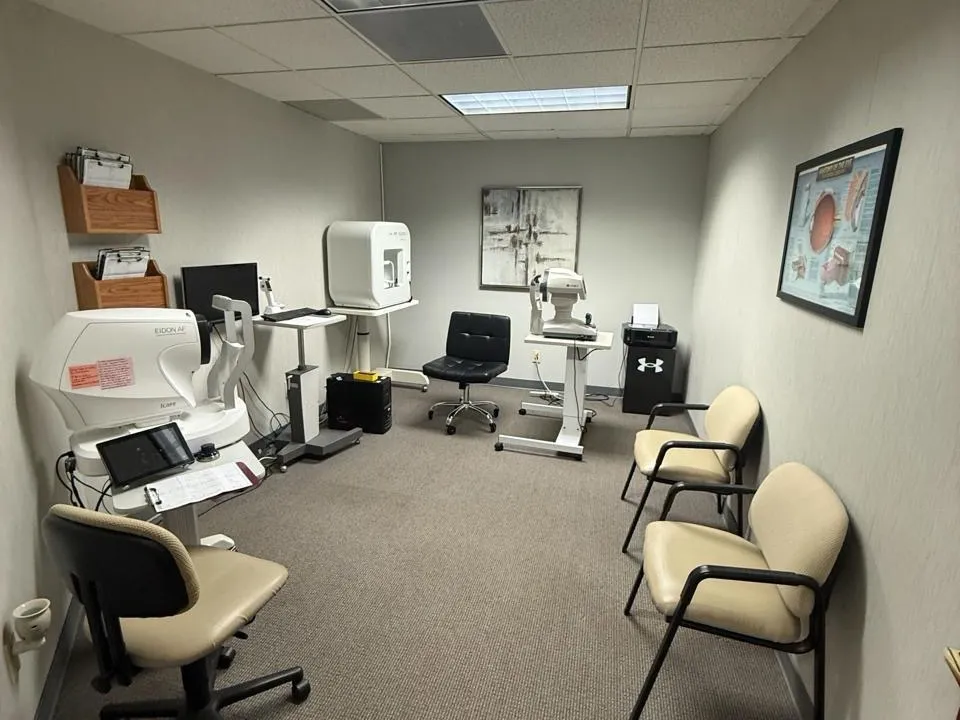
The availability of specific diagnostic equipment and the need for referral also depend on the practice’s services and the patient’s clinical findings.
The goal is not to perform as many tests as possible. It is to obtain the information needed for an accurate evaluation.
What Happens if Glaucoma Is Suspected?
An elevated eye pressure reading or an unusual optic nerve appearance does not automatically confirm glaucoma.
Some patients are considered glaucoma suspects because certain findings suggest a need for further investigation or monitoring.
In these situations, an eye care professional may recommend additional testing, repeat evaluations, or a referral for specialized care.
Sometimes, observing changes over time is necessary to understand whether progressive damage is occurring.
The appropriate plan depends on individual risk factors rather than a single measurement.
When glaucoma is diagnosed, treatment generally focuses on lowering intraocular pressure to help prevent additional optic nerve damage.
Treatment options may include prescription eye drops, laser procedures, or surgery, depending on the type and severity of glaucoma.
These treatments cannot restore vision already lost from glaucoma-related damage. However, they can help reduce the risk of further vision loss.
Treatment decisions should be made by an appropriately qualified eye care professional based on each patient’s needs.
How Often Should You Have Glaucoma Screening?
There is no single screening schedule that is appropriate for everyone.
The recommended frequency depends on age, family history, risk factors, and previous examination results.
The National Eye Institute advises people at higher risk, including African Americans over age 40, adults over age 60, and people with a family history of glaucoma, to receive comprehensive dilated eye examinations every one to two years.
Some individuals may need more frequent examinations depending on their clinical findings.
People without these particular risk factors still benefit from eye care appropriate to their age and medical history.
If you have already been diagnosed with glaucoma or are being evaluated as a glaucoma suspect, follow the schedule recommended by your eye care professional.
The important point is not to use the absence of symptoms as a reason to postpone eye health examinations indefinitely.
Glaucoma, Aging, and Maintaining Your Independence
Good vision supports activities that many of us take for granted.
Driving, navigating busy environments, noticing obstacles, exercising, and recognizing details around us all depend on different aspects of visual function.
As we age, protecting these abilities can help us maintain independence.
For adults in Gahanna and nearby communities such as Blacklick, New Albany, and Westerville, eye examinations can be part of a broader approach to healthy aging.
Unlike the difficulty focusing on nearby objects that commonly develops after age 40, glaucoma may not produce an easily recognizable change.
It is also different from cataracts, which affect the clarity of the eye’s natural lens.
Glaucoma damages the optic nerve and requires a different approach to evaluation and management.
Understanding these distinctions helps patients make informed decisions rather than assuming every vision change is simply part of getting older.
Glaucoma in Gahanna: How Smallwood Eye Associates Can Help
At Smallwood Eye Associates, eye care is closely connected to the history of the Gahanna community.
Dr. E. Connor Smallwood grew up in Gahanna and was a patient of the practice before pursuing his career in optometry.
Today, he continues a tradition of personalized eye care that has served local families for more than three decades.
That continuity is especially meaningful when discussing eye health throughout adulthood.
An eye examination should be more than an opportunity to update your glasses prescription.
It can also provide an opportunity to discuss medical history, evaluate eye health, and identify findings that may require additional attention.
Smallwood Eye Associates describes intraocular pressure measurement and optic nerve evaluation as components of its eye health examinations.
If findings suggest the need for further glaucoma investigation, appropriate guidance may include additional evaluation, monitoring recommendations, or referral to specialized care.
The practice’s approach emphasizes individualized attention, clear communication, and decisions based on each patient’s findings.
For patients living with diabetes, our guide to diabetic eye exams explains why regular eye health evaluations matter.
For anyone concerned about glaucoma risk factors, discussing those concerns during an eye examination is a meaningful first step.
When Do Eye Symptoms Require Immediate Medical Attention?
Most cases of open-angle glaucoma develop gradually without noticeable early symptoms.
However, a different condition called acute angle-closure glaucoma can cause sudden, severe symptoms.
Warning signs can include:
- Sudden, intense eye pain
- Significant eye redness
- Rapidly developing blurry vision
- Nausea or vomiting associated with eye pain
- Seeing halos around lights
These symptoms may indicate an eye emergency.
If you experience these symptoms, seek emergency medical care immediately. Do not wait for a routine eye appointment.
It is important to distinguish this urgent condition from preventive screening for open-angle glaucoma.
Frequently Asked Questions About Glaucoma
Can I have glaucoma even if my vision seems perfect?
Yes. Early open-angle glaucoma often causes no noticeable symptoms. Someone may continue seeing clearly while optic nerve damage is developing. Clear vision alone does not rule out glaucoma.
Is an eye pressure test enough to detect glaucoma?
No. Eye pressure is an important measurement, but it must be considered along with optic nerve findings, individual risk factors, and additional testing when appropriate.
Is glaucoma hereditary?
Family history is an important risk factor. Having close relatives with glaucoma increases your likelihood of developing the condition, but it does not make a future diagnosis inevitable.
Can glaucoma be cured?
There is currently no cure that reverses existing glaucoma-related optic nerve damage. However, appropriate treatment can help control the condition and reduce the risk of additional vision loss.
What is the difference between glaucoma and cataracts?
Cataracts affect the clarity of the eye’s natural lens. Glaucoma involves damage to the optic nerve. They are different conditions, although a person can develop both.
Should I wait until age 60 to be concerned about glaucoma?
No. Glaucoma can develop before age 60. A family history of glaucoma, elevated eye pressure, or other risk factors may justify earlier or more frequent evaluation.
Your Vision Deserves Attention, Even When Everything Feels Normal
It is easy to recognize the importance of eye care when vision problems begin interfering with everyday activities.
The challenge is remembering that some eye diseases do not provide obvious warning signs.
Glaucoma reminds us that healthy vision involves more than reading letters clearly or wearing the correct glasses prescription.
Understanding your risk factors, maintaining appropriate eye examinations, and investigating suspicious findings can make a meaningful difference in protecting your sight.
If you live in Gahanna or a nearby community and want to better understand your eye health, contact Smallwood Eye Associates.
Dr. Smallwood and his team can help you discuss your individual risk factors and determine the appropriate next steps for your eye health evaluation.
Medical References
- National Eye Institute: Glaucoma
- National Eye Institute: Glaucoma and Eye Pressure
- National Eye Institute: Statement on Detection of Glaucoma and Adult Vision Screening
Next Steps
Learn more about our eye care services in Gahanna. If you notice sudden eye pain, redness, or rapid vision changes, see our guide to urgent, same-day eye care or seek emergency care. Ready to be seen? Schedule your eye exam or call (614) 337-1015.