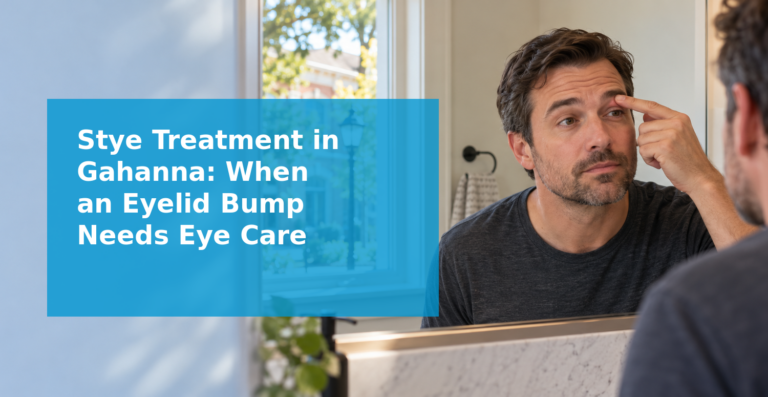

You wake up in Gahanna with a sore eyelid and a tender bump. Should you wait, try something at home, or call an eye doctor?
It may show up before a school day, a work meeting, or a weekend plan around Gahanna. The eyelid looks swollen, the area feels sore, and the first instinct is usually to find a quick way to make it disappear.
If you are searching for stye treatment in Gahanna, it helps to know that many styes improve with simple care. But not every eyelid bump is a stye, and not every stye should be managed by waiting it out.
At Smallwood Eye Associates, we evaluate painful styes and other eyelid concerns with the goal of identifying the cause, protecting eye health, and helping patients know what to do next.
What Is a Stye?
A stye, also called a hordeolum, is a red, tender bump caused by a local infection in an eyelid gland. It often forms near the lashes but can develop deeper inside the lid.
A blocked gland can become inflamed and infected. The area may feel sore when you blink or touch the eyelid, and the lid can look puffy or irritated.
Styes can occur on the upper or lower eyelid. They are common in both children and adults.
A simple stye is usually not dangerous. The important part is watching how it changes and not assuming every eyelid bump has the same cause.
Is It a Stye or a Chalazion?
A stye and a chalazion can look alike, but they are different conditions.
A stye is often more painful and typically appears close to the eyelash line. A chalazion is usually a firmer lump caused by a blocked oil gland within the eyelid. It may become less painful over time, even if the bump remains.
The American Academy of Ophthalmology explains that these conditions can overlap in appearance, which is one reason an eyelid bump that persists deserves an eye exam.
| Feature | Stye | Chalazion |
| Common location | Near the eyelid edge | More within the eyelid |
| Pain | Often tender or painful | May be less painful or painless |
| Appearance | Red, tender bump | Firmer, localized lump |
| Typical course | May improve over a short period | Can persist longer |
This comparison is useful for understanding the terms. It is not a diagnosis. Allergic eyelid swelling, conjunctivitis, irritation, and other eyelid conditions can also cause redness or swelling.
What May Help a Simple Stye at Home
A clean, warm compress may help ease discomfort and support the natural drainage of a blocked eyelid gland.
Use a clean cloth with comfortably warm water and place it gently over the closed eye for several minutes, a few times daily. Gently clean crusts along the lashes without scrubbing or pressing the bump. Improvement takes time.
Basic hygiene matters too:
- Wash your hands before touching the area around your eyes.
- Avoid rubbing the eyelid.
- Avoid squeezing, popping, or trying to drain the bump yourself.
- Do not use old eye drops, ointments, or antibiotics without professional guidance.
Trying to pop a stye can worsen irritation and may introduce more bacteria into the area. Medication is not automatically necessary, and the right treatment depends on what is actually causing the bump.
When Makeup or Contact Lenses Should Wait
A painful or swollen eyelid is not a good time to add more irritation.
Eye makeup can make the area harder to keep clean. Contact lenses may also be uncomfortable when there is redness, discharge, pain, or blurred vision. If those symptoms are present, remove the lenses and ask your eye care provider when it is appropriate to wear them again.
For everyday lens care and fitting guidance, see Contact Lenses in Gahanna.
Why Styes Can Keep Coming Back
One stye can occur without an obvious cause. Repeated styes are different. They can be a reason to look more closely at eyelid health.
Blepharitis is inflammation along the eyelid margins. It can contribute to irritation, debris near the lashes, and blocked eyelid glands. The National Eye Institute notes that blepharitis can be associated with styes and chalazia.
Some people may also have meibomian gland dysfunction, rosacea, dandruff, or a pattern of frequent eye rubbing that contributes to recurring eyelid irritation.
The goal is not to blame a patient for a recurring stye. It is to determine whether there is an underlying eyelid concern that needs a more consistent care plan.
When to Seek Stye Treatment in Gahanna
Many styes improve with basic care. An eye exam is appropriate when a bump does not improve, becomes recurrent, or causes symptoms beyond mild local discomfort.
Contact an eye doctor if you notice:
- Significant pain or rapidly worsening swelling.
- Redness or swelling spreading beyond a small area of the eyelid.
- Blurry vision or another change in vision.
- Strong light sensitivity.
- Fever or feeling unwell along with swelling around the eye.
- Difficulty opening the eye normally.
- A bump that persists or returns repeatedly.
New vision changes, significant pain, or spreading swelling need prompt assessment. Sudden vision loss, pain with eye movement, or swelling with fever warrants immediate medical care.
Smallwood Eye Associates lists painful styes among the eye concerns its team evaluates. When symptoms are urgent or vision is affected, see our guide to Urgent Eye Care in Gahanna.
Why an Eye Specific Evaluation Matters
An eyelid bump may look simple from the outside. A proper eye evaluation can determine where the bump is located, whether it appears to be a stye or chalazion, whether the eye itself is affected, and whether recurring eyelid inflammation may be involved.
That distinction matters because the right next step is not always the same.
At Smallwood Eye Associates, Dr. E. Connor Smallwood, O.D., and the team evaluate patients with a practical, careful approach. For Gahanna families, that means having a local eye care practice to call when a painful eyelid bump is not improving or does not look like a routine problem.
Do Not Assume Every Red Eye Is Related to a Stye
Sometimes a swollen eyelid appears alongside red eyes, discharge, itching, or irritation. Those symptoms can point to a different issue.
If you are unsure whether the concern is an eyelid bump, pink eye, or another cause of redness, read Pink Eye Treatment in Gahanna, Ohio. A clinical exam is the right next step when symptoms overlap or become more severe.
The Right Care Starts With the Right Cause
A stye may be small, but it does not need to be handled with improvisation.
Warm compresses, gentle hygiene, and patience may be enough for many simple cases. Significant pain, changing vision, spreading swelling, recurring styes, or a persistent bump deserve an eye evaluation.
Smallwood Eye Associates helps patients understand what may be causing the problem and find appropriate care for eyelid and eye health.
Schedule an appointment with Smallwood Eye Associates if you have a painful, recurring, or persistent stye.
This article is for educational purposes and does not replace individualized eye care.
Frequently Asked Questions
Why do styes keep coming back?
Recurring bumps can be related to blepharitis, blocked oil glands, or skin conditions such as rosacea. An eye exam can help identify contributing factors and guide a consistent eyelid care routine.
Can I pop a stye?
No. Squeezing, popping, or trying to drain a stye at home can worsen irritation and increase the risk of complications.
When should I see an eye doctor for a stye?
Arrange an exam if the bump persists, keeps returning, worsens, or leaves you unsure what it is. Seek prompt care for significant pain, spreading swelling, fever, or changes in vision.
How do I know if it is a stye or a chalazion?
A stye is often painful and appears near the eyelid edge. A chalazion is usually a firmer bump caused by a blocked oil gland and may be less painful. An eye exam can distinguish the two.
Can I wear contact lenses with a stye?
If you have pain, redness, discharge, blurry vision, or significant irritation, remove your lenses and seek guidance before wearing them again.
Can a stye affect my vision?
A simple stye usually does not affect vision. Blurry vision, significant pain, major swelling, or light sensitivity should be evaluated more promptly.
External References
- American Academy of Ophthalmology: What Is the Difference Between a Stye and a Chalazion?
- National Eye Institute: Blepharitis
- American Association for Pediatric Ophthalmology and Strabismus: Chalazion
Next steps
Learn more about our eye care services in Gahanna. If your eye needs attention sooner, see our guide to urgent, same-day eye care. Ready to be seen? Book your appointment or call (614) 337-1015.